The best digital product passport tools for fashion

There's a growing number of platforms and software solutions claiming to solve the Digital Product Passport for fashion. Some of them are good. The problem is that most weren't built as dedicated DPP software. They're traceability platforms, carbon accounting systems, or supply chain management tools that added a DPP output once the regulation started getting attention. That doesn't make them bad, but it does mean the DPP is often an afterthought rather than the core product. For brands trying to figure out which digital product passport software actually fits their needs, this distinction matters more than any feature comparison table.
The tool you choose depends on a few things: how mature your product data already is, whether you're solving for pure regulatory compliance or trying to build something customers will engage with, how much you're willing to spend, and how quickly you need to move. The textile delegated act is expected between late 2026 and Q2 2027, with mandatory compliance roughly 18 months later. That timeline is real, and the brands that have their infrastructure in place early will have a significant advantage over those scrambling at the last minute.
This post breaks down five platforms that represent the main approaches to DPP software in fashion. Each one is good at something different. The goal here isn't to rank them, it's to help you figure out which digital product passport platform actually fits your situation.
What to look for in a DPP platform#
Before comparing specific tools, it helps to know what actually matters when evaluating them. Not every platform approaches the DPP the same way, and the differences are more fundamental than feature checklists suggest.
The first thing to consider is whether the platform handles the customer-facing passport or just the data infrastructure behind it. Some tools are excellent at collecting and structuring supply chain data but produce a passport that looks like a government form. If the DPP is going to be a customer touchpoint (and it should be), the experience matters. Design, branding, and usability aren't extras. They're the difference between a passport customers scan once and never revisit, and one that actually becomes a channel.
The second consideration is environmental impact data. The DPP is expected to require lifecycle environmental impacts like carbon footprint and water consumption, likely calculated using the Product Environmental Footprint (PEF) methodology. Some platforms have this built in. Others require you to bring your own LCA data or integrate with a separate tool. If you don't already have product-level environmental data, this is one of the harder data requirements to solve, and whether a platform helps you solve it or leaves it to you is a meaningful differentiator.
Third is integration. Your product data lives in multiple systems: Shopify or another e-commerce platform, your PLM, maybe an ERP, spreadsheets, PDFs in someone's inbox. A DPP platform that can pull from these sources automatically saves you from the manual data entry that makes compliance projects drag on for months.
Fourth, and this is the one most brands don't think about until they see a quote: pricing model. Many of these platforms aren't DPP tools that happen to do other things. They're enterprise supply chain or LCA platforms that happen to output a DPP. That means you're paying for, and onboarding, a full traceability or carbon accounting system even if all you need right now is a product passport. For mid-market brands, this can be the difference between a tool that costs a few thousand euros a year and one that costs six figures.
Carbonfact#
Carbonfact is a carbon accounting and LCA platform built specifically for fashion and footwear. It runs product-level life cycle assessments across your entire catalogue using your actual product data (materials, suppliers, processes) and turns that into environmental impact numbers you can use for reporting, decarbonization, and increasingly, Digital Product Passports.
The DPP is part of Carbonfact's reporting suite. Once your products have been assessed through their LCA engine, the platform can generate consumer-facing passports with QR codes and hosted pages. They can also act as the environmental data engine feeding another DPP front-end if you prefer a different consumer-facing tool. Brands like A.P.C. and Promod use Carbonfact, and the platform has strong credibility on the environmental data side, with transparent methodologies and fashion-specific modeling.
The trade-off is that Carbonfact is an LCA platform first. The DPP is an output of that system, not the central product. If what you need is rigorous carbon accounting across your full catalogue with DPP as one of several reporting outputs, Carbonfact is a strong choice. But if you're primarily looking for a DPP tool with great design and fast implementation, you're paying for, and onboarding, a full carbon accounting platform to get there. The passport design and customization options are more limited compared to DPP-first platforms, and the implementation timeline reflects the scope of a full LCA integration. Best suited for larger brands that need comprehensive environmental data and see the DPP as part of a broader sustainability reporting strategy.
Retraced#
Retraced is a supply chain traceability and compliance platform built for fashion and textiles. It's German-based, well-established, and focused on helping brands digitize and manage their supplier relationships across multiple tiers. The platform covers supplier lifecycle management, risk assessment, certification tracking, and regulatory compliance for frameworks like CSDDD, LKSG, and AGEC.
The DPP capability in Retraced is an extension of the traceability data you're already managing in the system. Because Retraced is built around supplier data collection and validation, the passport it generates is grounded in verified supply chain information: materials, production steps, certifications. That's a genuine strength for brands that need audit-grade traceability behind their DPP. The platform also uses AI for supplier risk profiling and data validation, and it has a strong network effect from the supplier ecosystem already onboarded.
The trade-off is that Retraced is a supply chain management system first. The consumer-facing passport is an output of compliance work, not a brand experience designed for customer engagement. If your primary challenge is multi-tier supply chain visibility and you need the DPP as one deliverable within a larger compliance programme, Retraced makes sense. But if you're a brand that already has reasonable supply chain visibility and needs a DPP tool that's fast to implement and designed for customers, the full platform may be more than you need, and priced accordingly. Best suited for brands with complex global supply chains and heavy regulatory compliance requirements.
EON#
EON is the pioneer of Digital IDs in fashion. Founded in 2017, the company developed the CircularID Protocol — a standardized data language for digital identification of apparel products — and has been building connected product infrastructure for some of the largest names in fashion. Clients include Chloé, Coach, YOOX NET-A-PORTER, H&M, and PANGAIA. EON was selected for the EU's CIRPASS-2 pilot programme and is a member of the Sustainable Markets Initiative's Fashion Task Force.
EON's approach is broader than just the DPP. Their Product Cloud platform treats each garment as a connected product with a digital identity that powers authentication, resale, repair, recycling, and customer engagement throughout its lifecycle. The focus is on RFID and NFC-based data carriers, not just QR codes, which enables more sophisticated retail, logistics, and post-sale use cases. For luxury brands in particular, the item-level digital identity that EON provides goes well beyond regulatory compliance into brand protection, resale facilitation, and customer relationship building.
The trade-off is scale and investment. EON is built for brands digitizing hundreds of thousands or millions of products. The implementation is substantial, the pricing reflects the enterprise scope, and the platform assumes a level of organizational readiness that mid-market brands often don't have. If you're a luxury or large enterprise brand looking to build connected product infrastructure that the DPP fits into, EON is the most established player. But if you're a mid-market brand looking to get DPP-ready quickly and affordably, this is likely more than you need. Best suited for luxury and enterprise brands with the resources and ambition to build a connected product ecosystem.
Renoon#
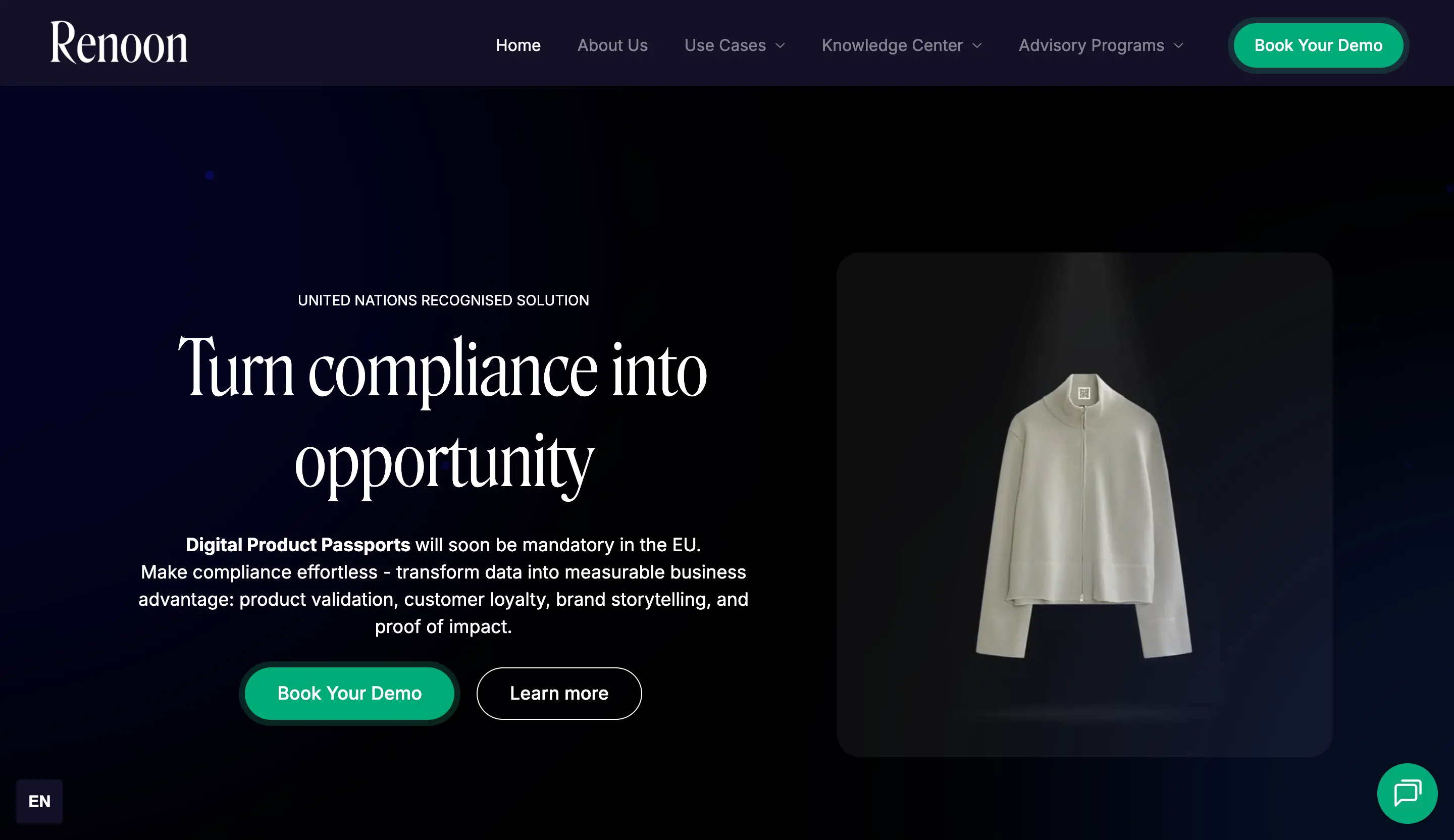
Renoon is an end-to-end transparency platform based in the Netherlands and Italy. It covers DPP generation, supply chain mapping, compliance automation, and consumer engagement in a single modular toolkit. The platform offers full passport design customization, e-commerce widget integration for displaying transparency data on product pages, and QR code generation for offline access. Renoon is active in EU standardization work through CIRPASS-2 and GS1, and has partnered with brands including Dondup, WOMSH, Artknit Studios, and Copenhagen Cartel.
What distinguishes Renoon from the traceability-first or LCA-first platforms is that it's trying to be the all-in-one solution: data collection, validation, impact metrics, compliance, and consumer-facing output in one place. The platform uses AI to connect with internal systems like PLMs and automatically organize data, which reduces manual effort. For brands that want a single vendor for transparency and DPP rather than stitching together multiple tools, Renoon's breadth is genuinely appealing.
The trade-off is that breadth can come at the cost of depth. Renoon mentions automated LCA capabilities, but it's less clear from their public materials whether this is a built-in prediction engine with its own trained models or a structured data aggregation approach. Brands that need rigorous, methodology-transparent product-level environmental footprints should verify the specifics. The wide feature set also means the platform is trying to serve many use cases simultaneously, from small artisan brands to larger enterprises, which can affect focus. Best suited for brands that want one platform to handle transparency, compliance, and DPP generation and value breadth of capabilities over specialization.
Avelero#
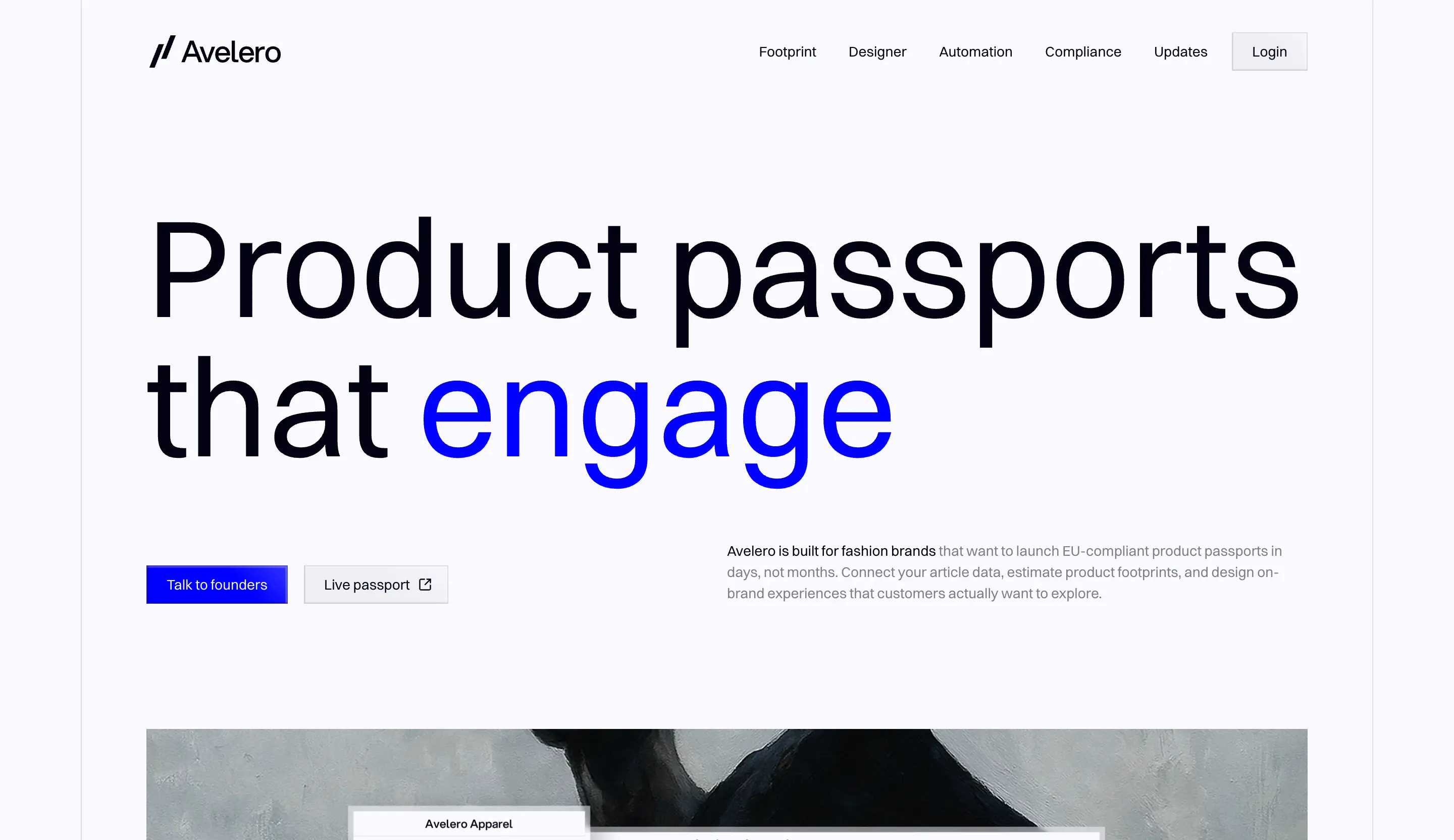
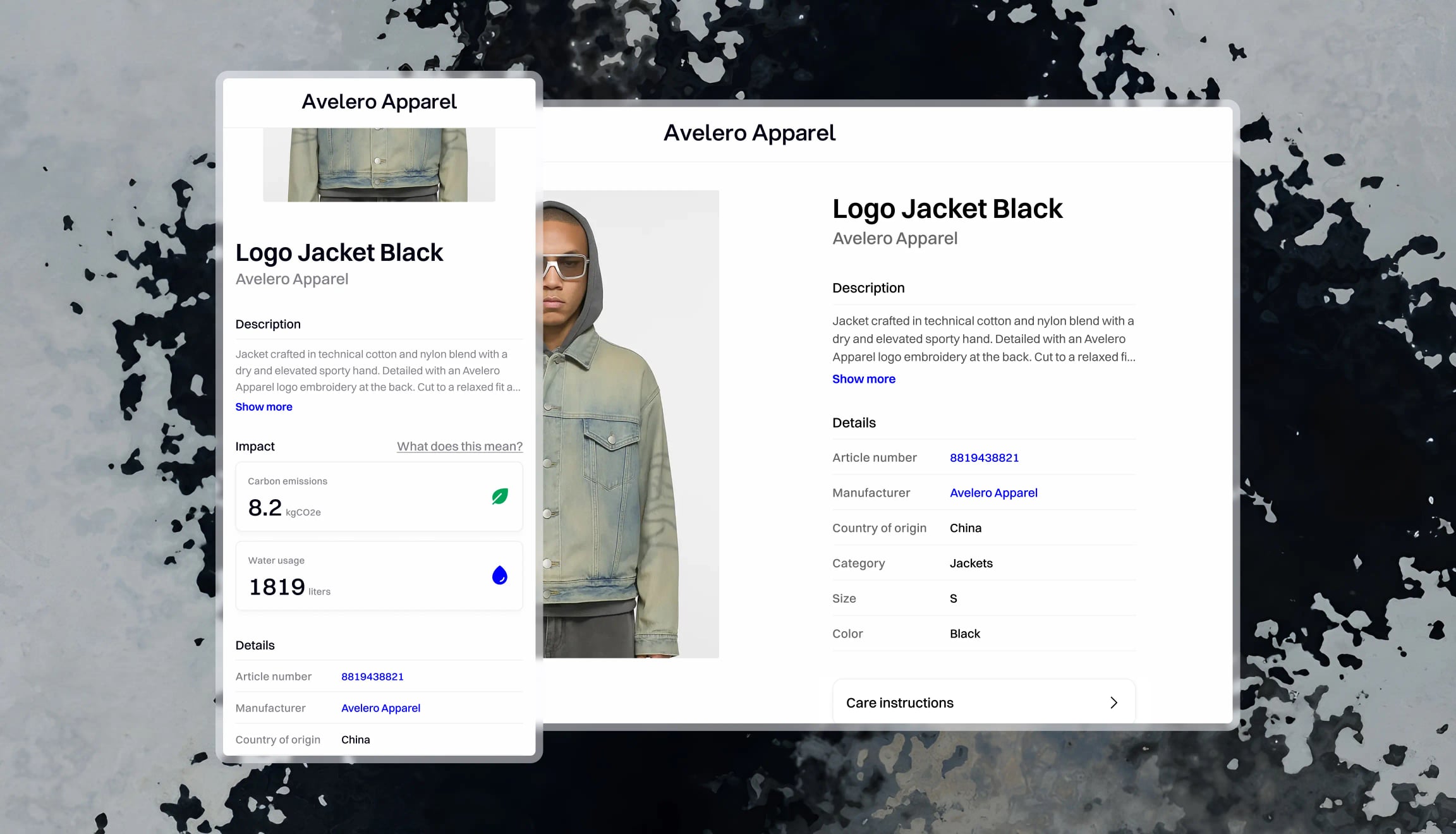
Avelero is a DPP-first platform. Where most tools on this list started as something else (an LCA engine, a supply chain system, a traceability platform) and added DPP as an output, Avelero was built from the start around the product passport as a customer-facing product. The operating assumption is that if the passport doesn't look good and isn't useful to the person scanning it, the regulation becomes a missed opportunity rather than a channel.
The platform includes a theme editor that lets brands customize the passport's colors, fonts, layouts, and content blocks to match their visual identity. The passport feels like an extension of the brand's website, not a generic compliance page hosted on a third-party domain. This matters because customers associate the passport with the brand, and the quality of that experience reflects directly on how the brand is perceived.
Where Avelero stands out on the data side is its built-in product footprint engine. It has an ML-based prediction model that calculates carbon footprint and water scarcity impacts directly from product data: material compositions, weights, supplier locations. It's trained on established LCA databases and doesn't require brands to run separate life cycle assessments or integrate with external LCA tools. For most mid-market brands, lifecycle environmental impact data is the single hardest data requirement to fill. Having it built into the DPP platform, rather than requiring a separate five- or six-figure LCA subscription, removes a significant barrier.
On the implementation side, Avelero integrates with existing systems like Shopify and supports direct data uploads, so brands can start generating passports in days rather than months. There's no six-month integration project with multiple stakeholders. You connect your product data, customize the design, and start generating QR codes. As the regulation evolves and more data becomes available, the passports update accordingly.
The trade-off is scope. Avelero is focused specifically on the Digital Product Passport. It's not a full supply chain management platform, and it's not a comprehensive carbon accounting system. Brands that need multi-tier supplier auditing, CSDDD compliance reporting, or full-catalogue LCA with scenario modeling will need additional tooling for those functions. But for brands whose primary need is a well-designed, regulation-ready product passport with integrated environmental impact data, without enterprise pricing or timelines, Avelero is built for exactly that. Best suited for mid-market fashion brands that want a DPP customers will actually use, with product footprint data built in and a fast path to implementation.
How to choose the right DPP software#
The right tool depends on what problem you're solving first.
If your primary challenge is carbon accounting and environmental reporting, and the DPP is one output among several, Carbonfact gives you the most rigorous LCA foundation with DPP built on top. If your main concern is supply chain compliance and multi-tier traceability, Retraced provides the infrastructure to manage supplier relationships and produce a DPP grounded in verified data. If you're a luxury or enterprise brand building connected product infrastructure at scale, EON is the most established player with the deepest ecosystem. If you want a single platform covering transparency, compliance, and DPP together, Renoon offers the broadest feature set. And if what matters most is a passport that customers engage with, environmental impact data that's built in rather than bolted on, and getting live quickly without enterprise budgets, Avelero is purpose-built for that.
One thing worth factoring into the decision is pricing reality. Platforms where the DPP is a module within a larger supply chain or LCA system typically carry enterprise pricing that reflects the full scope of the platform, not just the passport. If you're a mid-market brand that doesn't yet need a six-figure compliance suite, paying for one just to get a DPP is hard to justify. Tools where the passport is the core product tend to be priced more accessibly and faster to implement, because you're not onboarding capabilities you don't need yet.
There's no single right answer. The DPP landscape is still maturing, and the final requirements won't be locked until the textile delegated act is published. But the direction is clear, and starting now, even with a small pilot, puts you ahead of brands that wait. Pick the tool that matches where you are today, not the one that solves every problem you might have in three years.