Digital product passport
A new customer touchpoint
Create EU-compliant digital product passports that customers actually want to explore. Connect your data, estimate your footprint, design your passport, and go live in days.
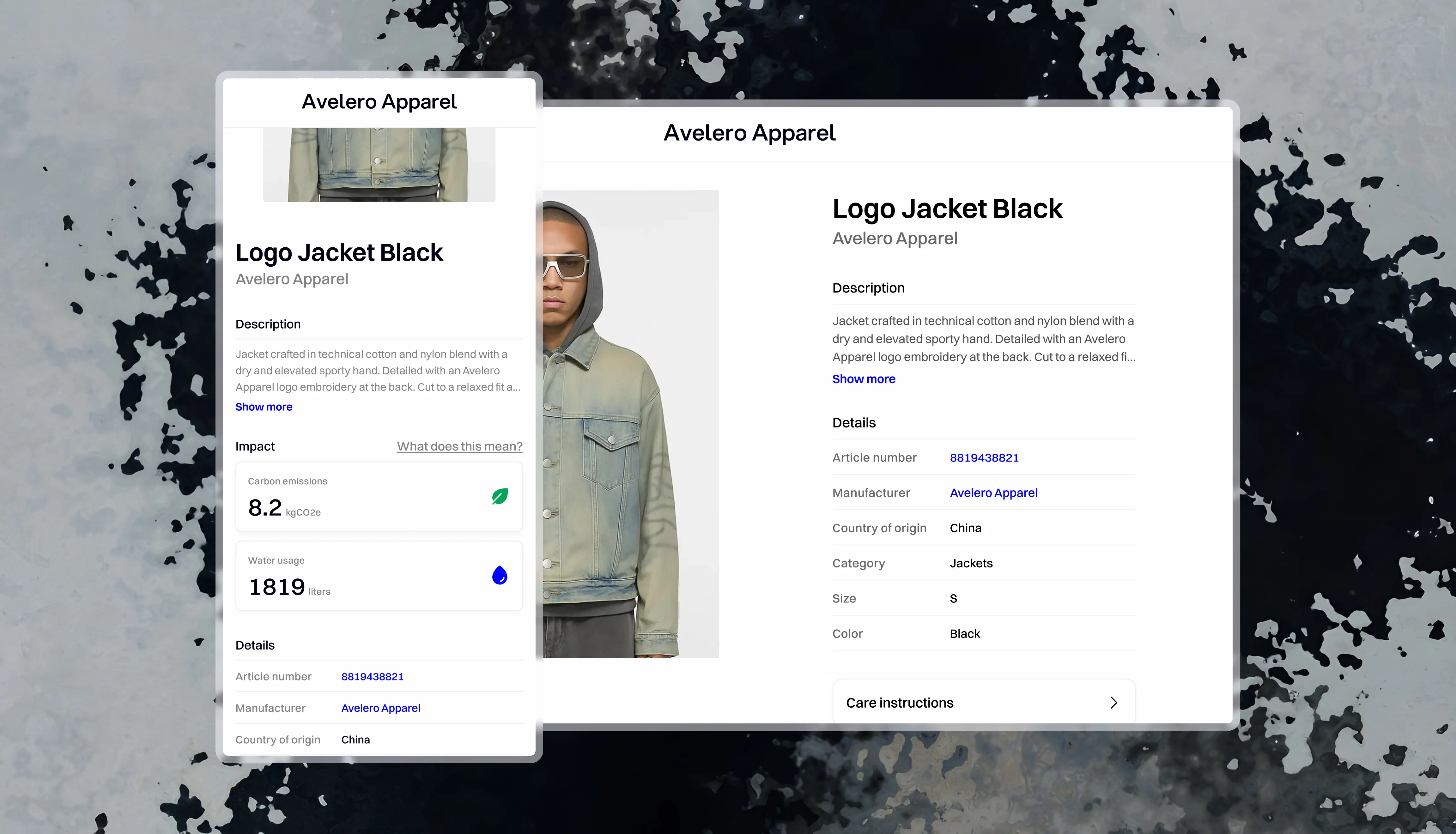
Digital product passports
for fashion brands
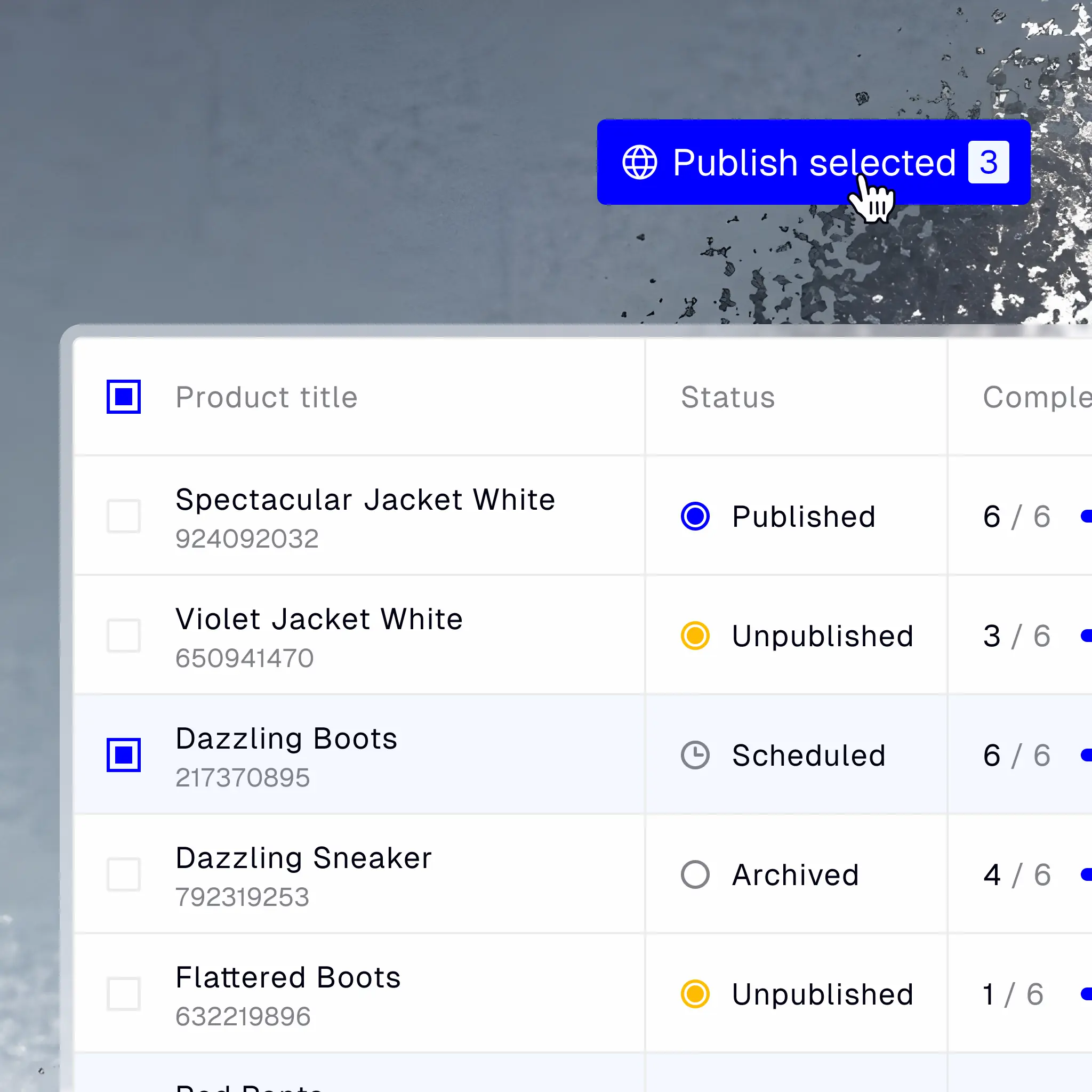
Avelero turns your product data into EU-compliant digital product passports that customers actually want to explore.
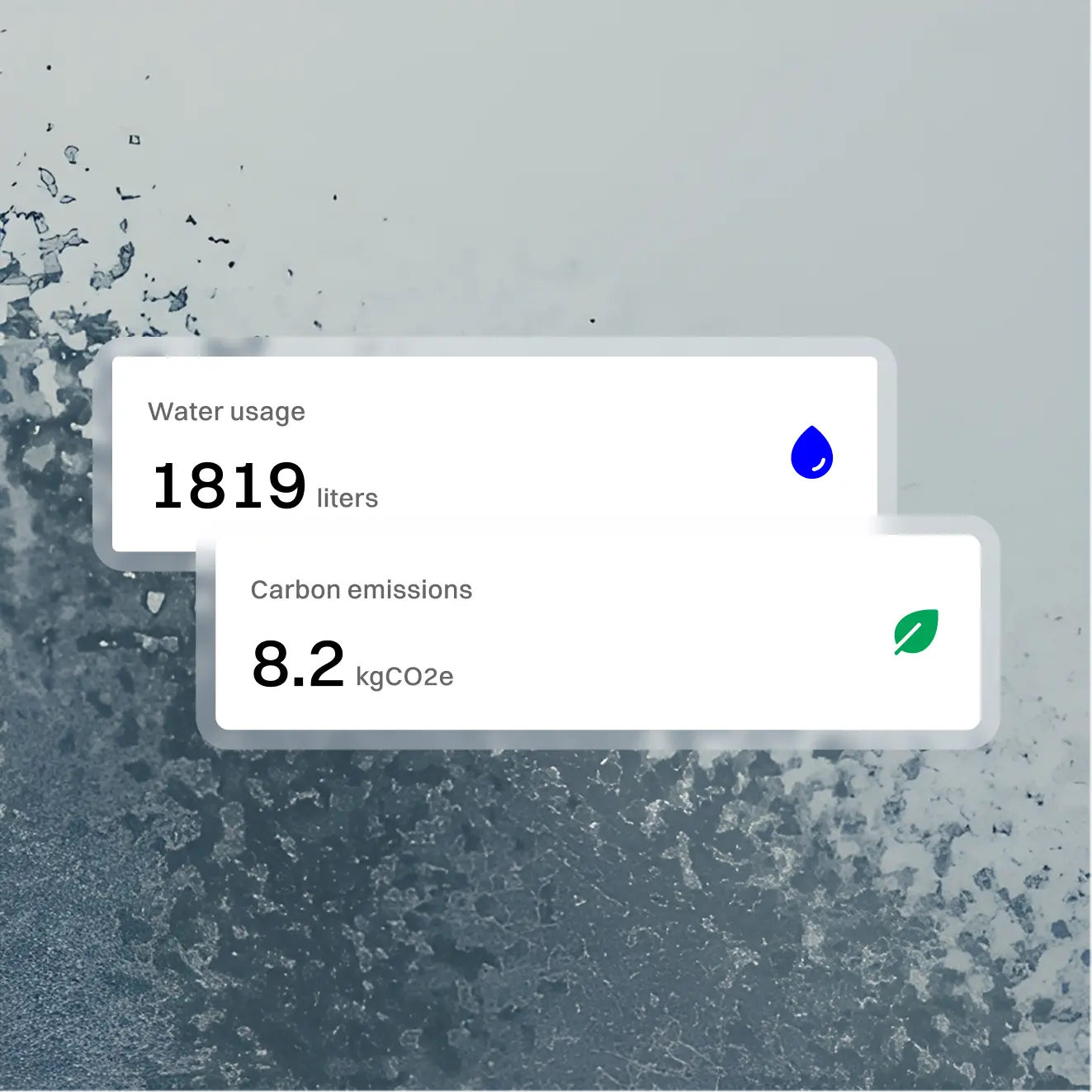
Share your impact
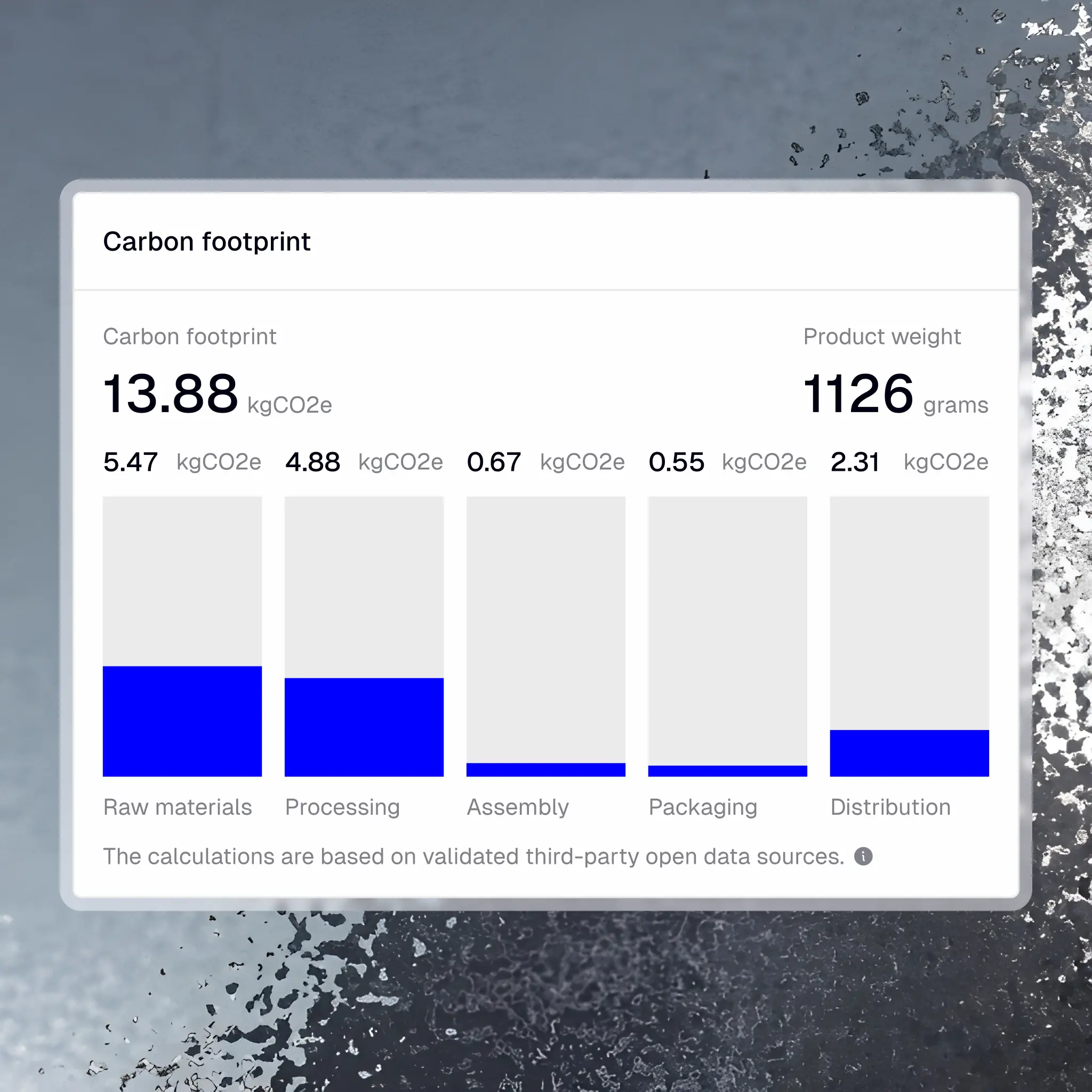
Show customers the environmental footprint of every product.
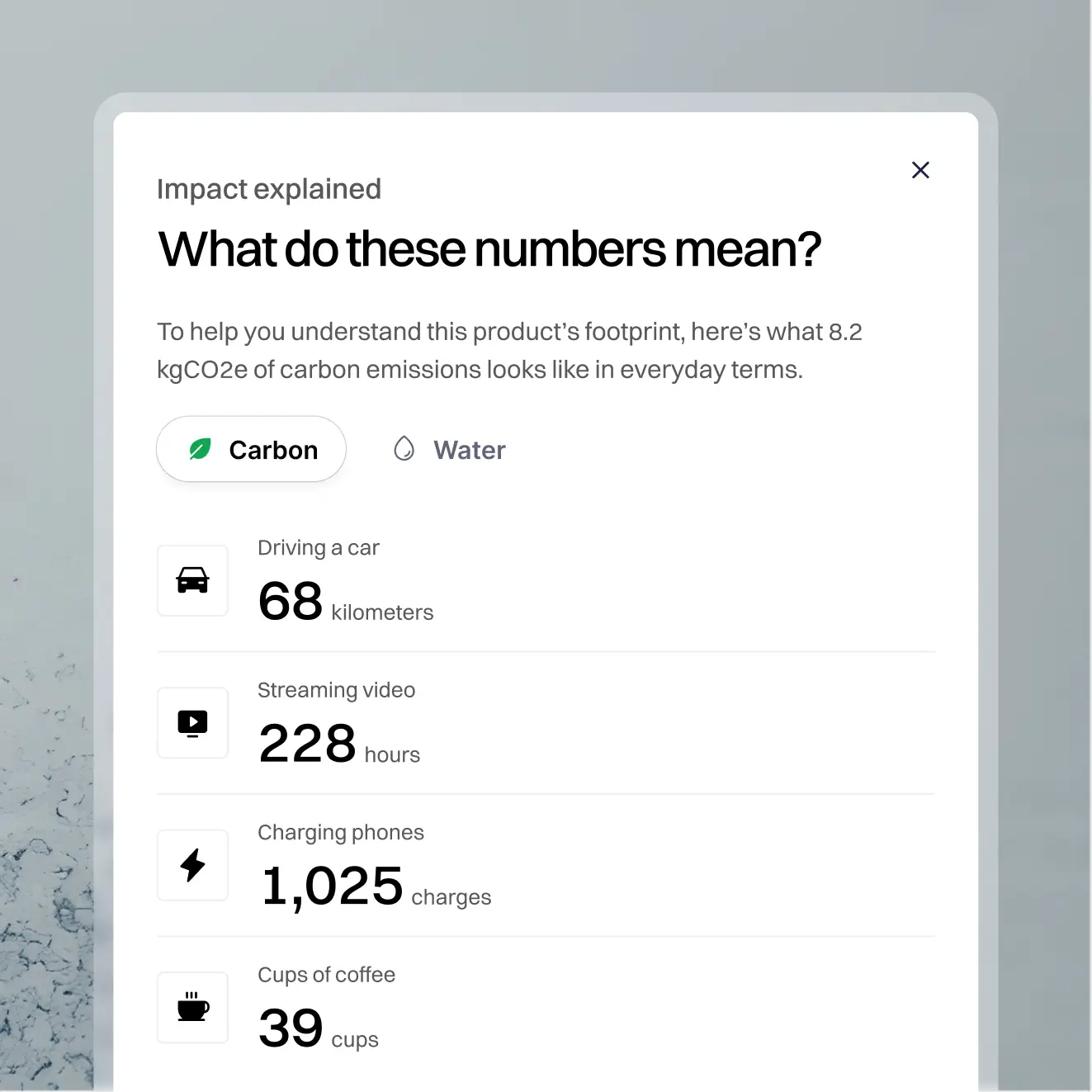
Educate your customers
Turn complex sustainability data into simple, visual explanations anyone can understand.
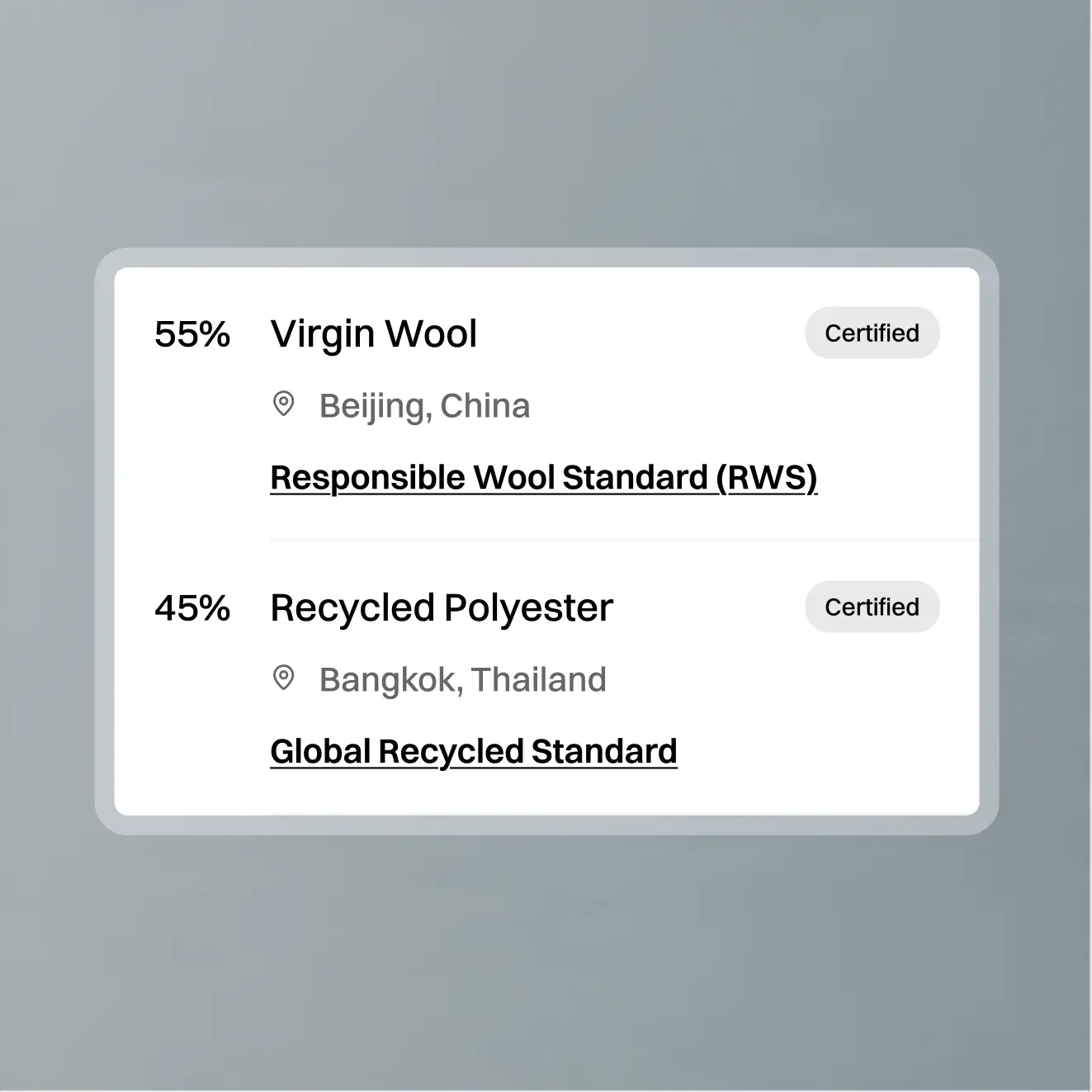
Attach your certifications
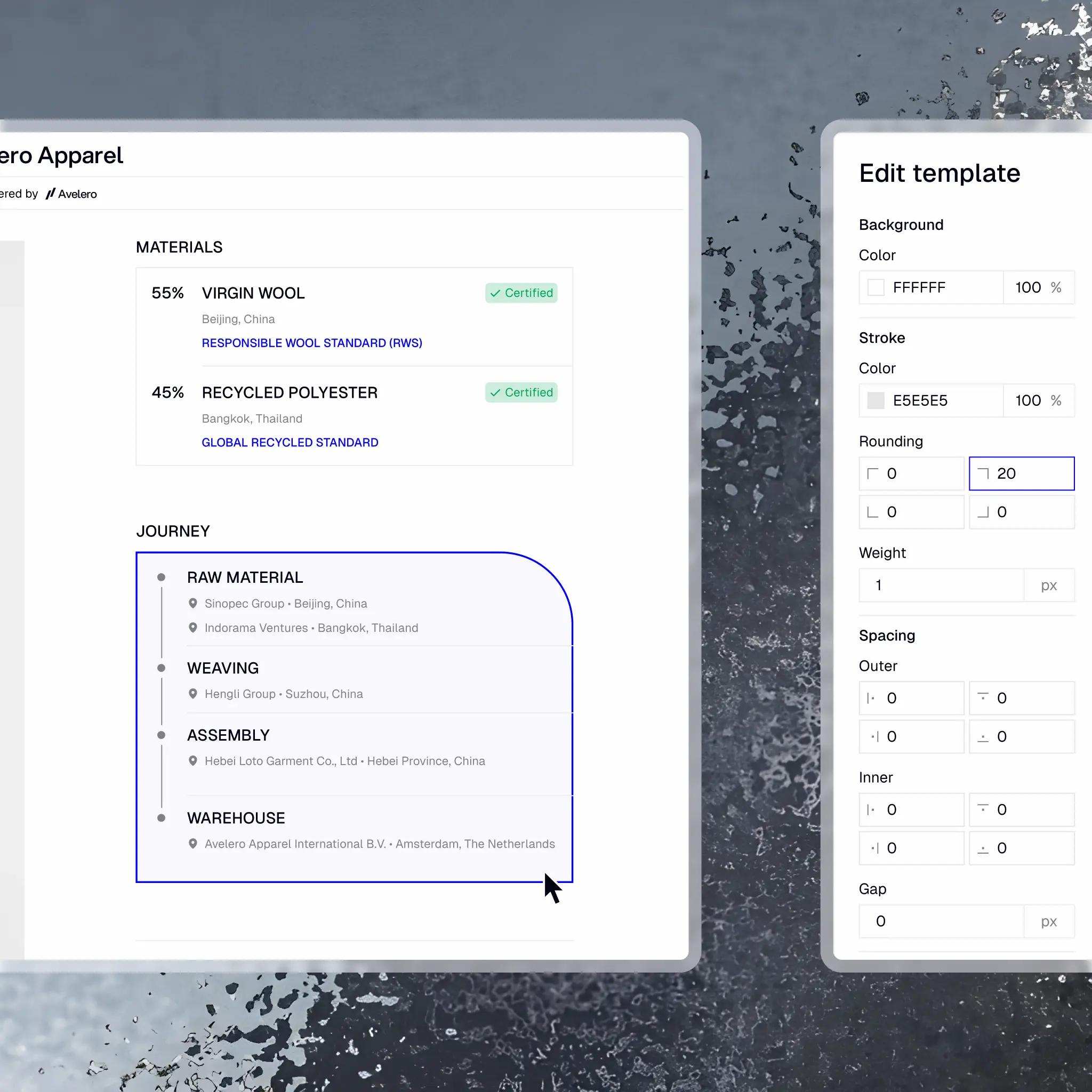
Display material origins, suppliers, and certifications on the passport.
Stay compliant & secure
with Avelero
ISO 14040-44
Footprint model trained in accordance with ISO 14040-44 lifecycle assessment standards.
GDPR
Product and consumer data processed in full compliance with EU privacy law.
ESPR
Meets EU Eco-Design for Sustainable Product Regulations.
AWL
Meets France's Anti-Waste and Circular Economy Law.
How it works
in four steps
How it works
in four steps
Questions & Answers
A digital product passport (DPP) is a product-level digital record that contains information about a product's materials, origin, environmental impact, and end-of-life options. Consumers access it by scanning a QR code on the product label or packaging.
The EU's Ecodesign for Sustainable Products Regulation (ESPR) was adopted in 2024. Textile-specific requirements are expected to be adopted in 2027, with an 18-month transition period, meaning brands selling in the EU should be ready by 2028-2029.
A DPP typically includes material composition by weight, country of origin and manufacturing location, carbon footprint per unit (in kg CO₂e), care and repair instructions, recyclability and end-of-life guidance, and relevant certifications or compliance data.
Any brand selling products in the EU market must comply, regardless of where the company is headquartered or where the products are manufactured. This includes non-EU brands exporting to European retailers.
A product label shows static, limited information like size and wash instructions. A digital product passport is a living digital record that can include supply chain data, environmental scores, certifications, care guides, and even resale or recycling options, all accessible via a scannable QR code.
By scanning a QR code printed on the product's care label, hangtag, or packaging. The QR code links to a branded web page showing the product's full passport. No app download required.
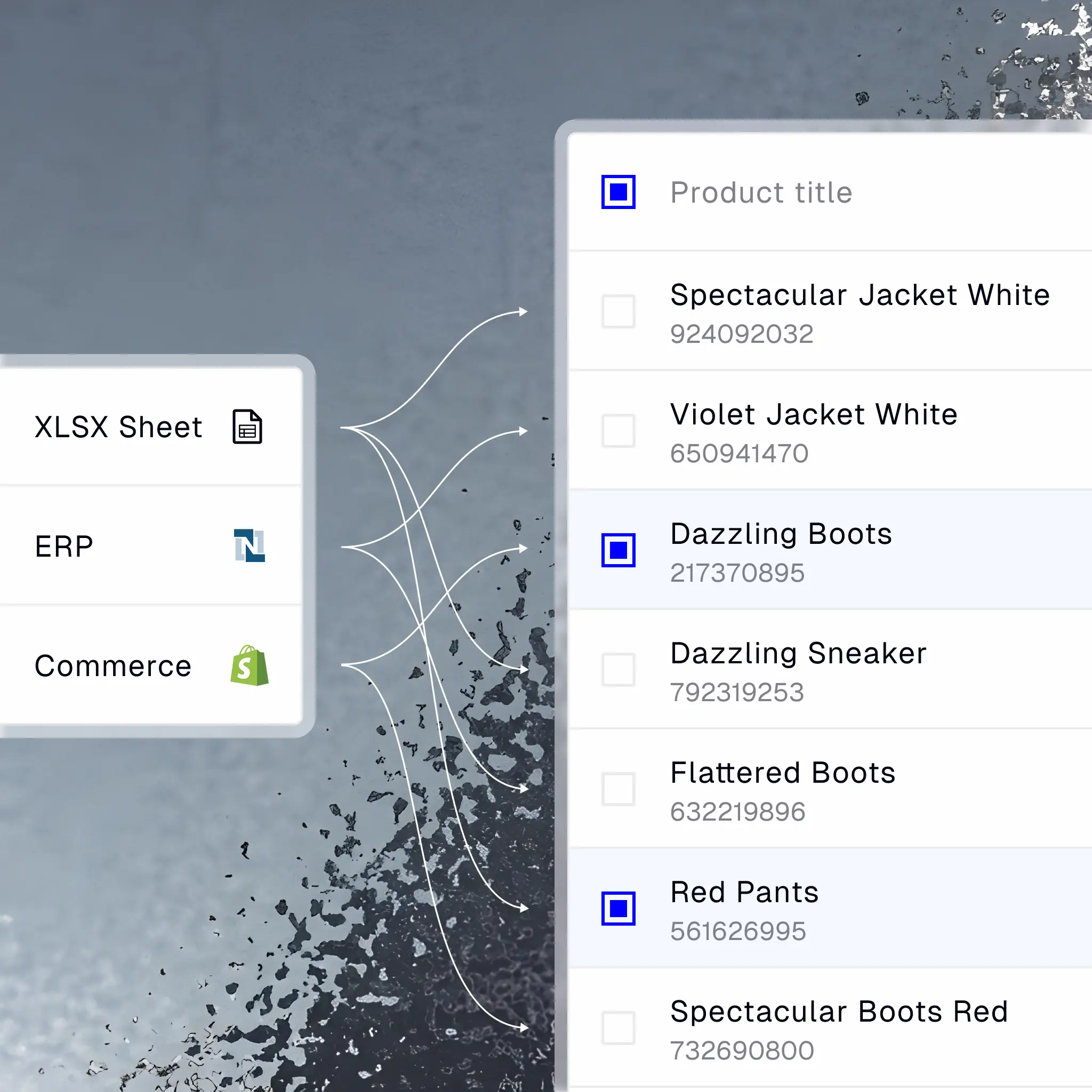
You can get started with as little as a product category and basic material info. For a more detailed passport, add supplier locations, weights, and certifications. Avelero's ML model predicts your environmental footprint and flags any missing data automatically.
With Avelero, yes. You can customize the layout, colors, typography, and content sections of your passport to match your brand identity. Every passport is an extension of your brand, not a generic compliance page.
Costs vary by provider and the number of SKUs you need to cover. Avelero offers plans designed for brands of all sizes, from emerging labels to enterprise catalogs.
The regulation originates in the EU, but its impact is global. Any company selling into the EU must comply. Additionally, similar regulations are emerging in the UK, France (AGEC/Anti-Waste Law), and other markets, making DPP adoption a future-proof investment regardless of where you sell.
Updates
See more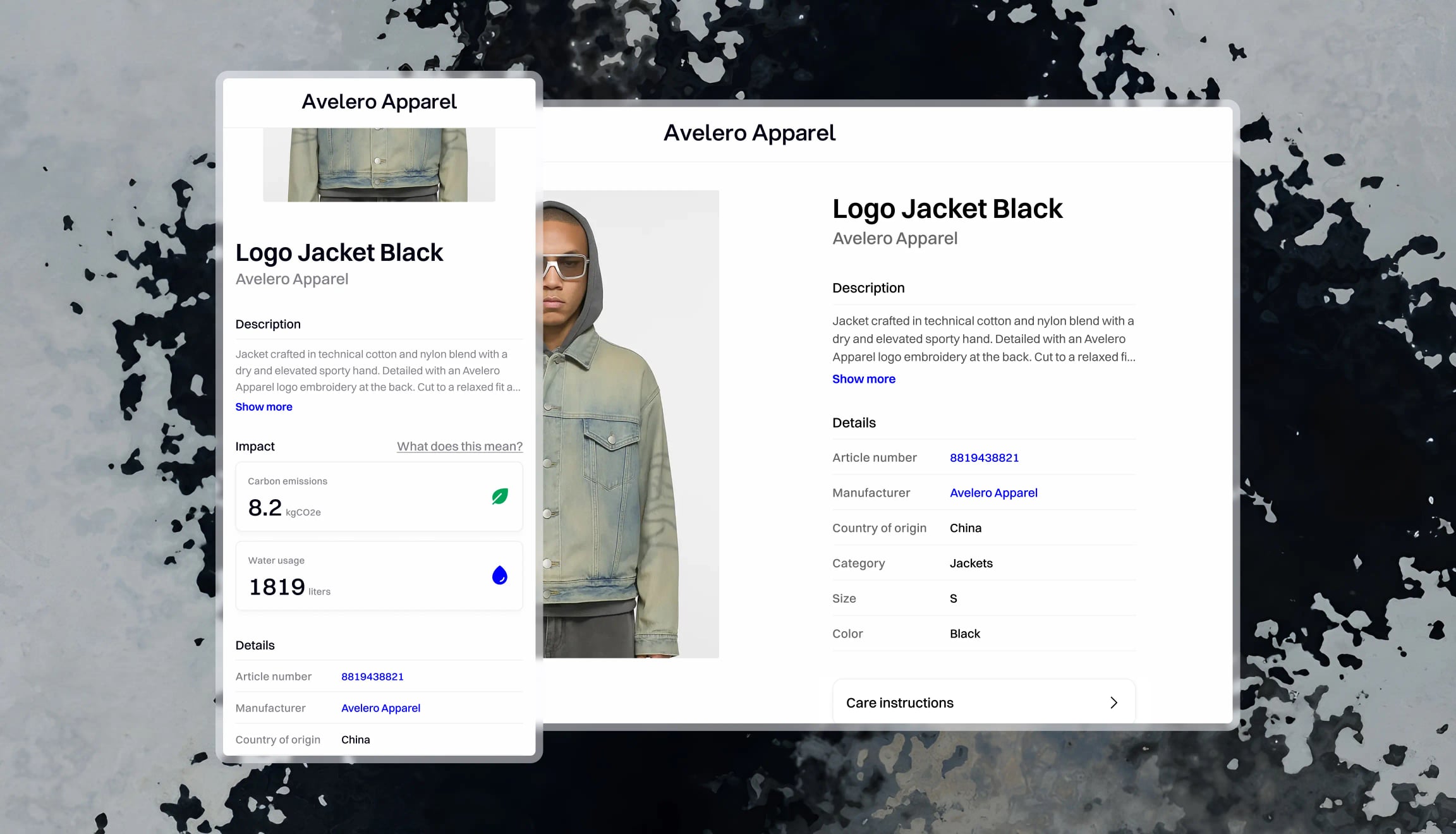
What is an EU digital product passport?
A practical explanation of the EU's Digital Product Passport: what it is, what data it requires, who it applies to, and what it means for fashion brands.

What the GS1 Digital Link means for your product passport
Learn what the GS1 Digital Link standard means for your fashion brand's Digital Product Passport. How the URL structure works, why EU ESPR compliance relies on it, and how it connects QR codes to product data.

The best digital product passport tools for fashion
A comparison of the best digital product passport software and platforms for fashion brands. What each tool does best, how they differ on compliance vs. customer engagement, and how to choose the right one.